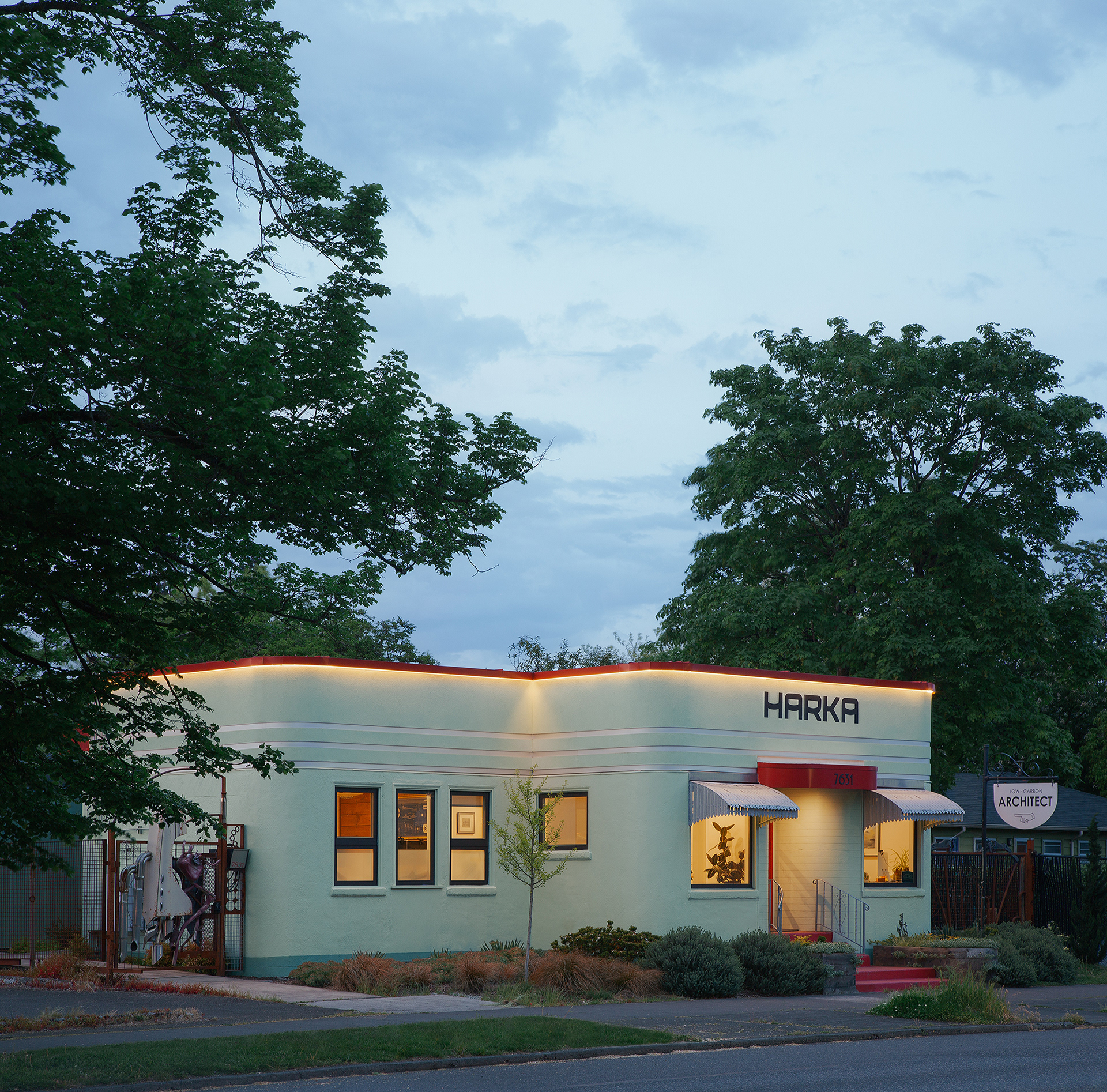
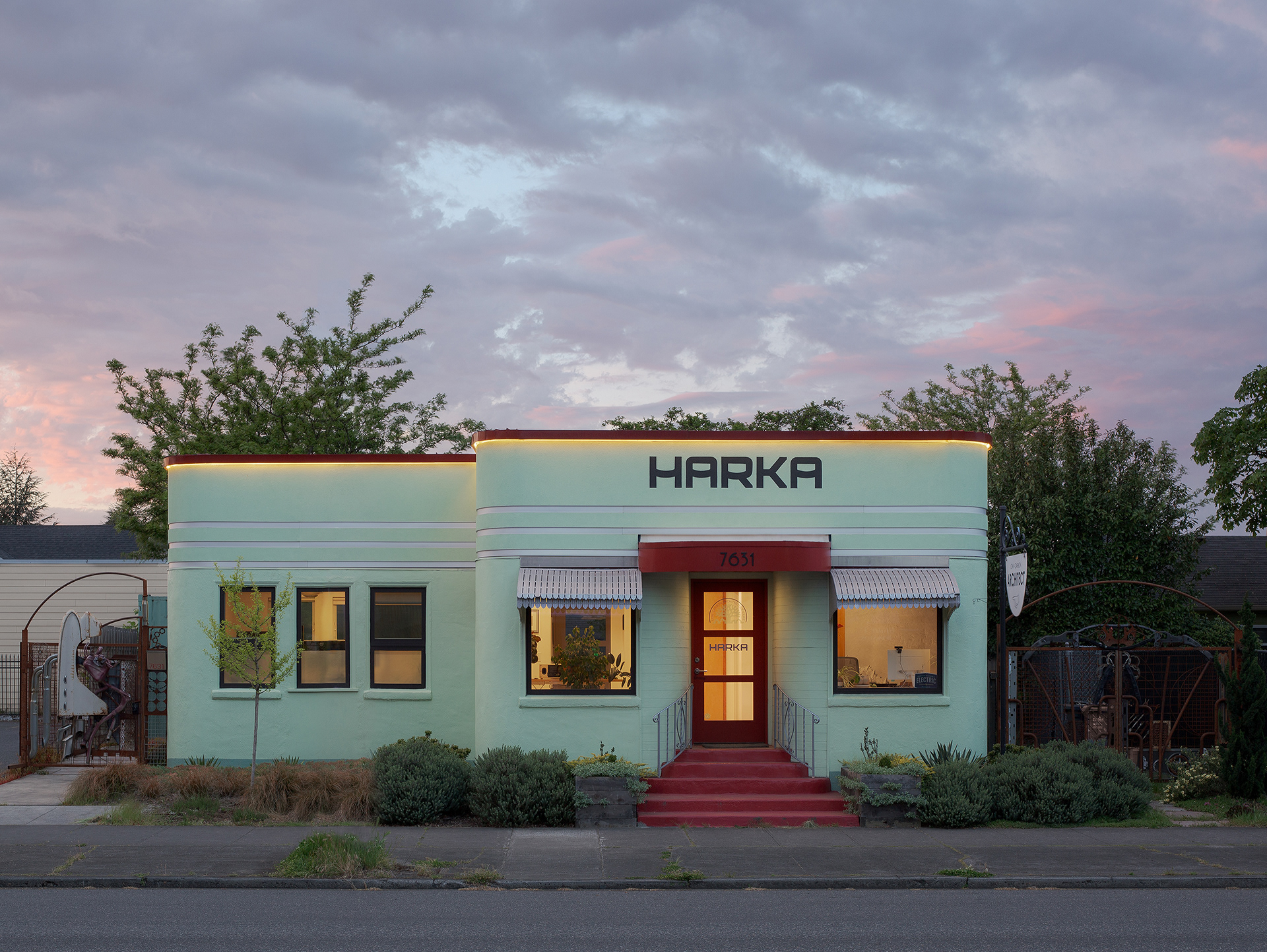
The building has been many things. A dentist's office, where Herbert Craner practiced for seventeen years with the chairs positioned in the front windows so that passersby on NE Glisan could watch teeth being worked on, then a pizza restaurant. Then a tattoo parlor. Then a cafe, an herb shop, a Somali restaurant. Each tenant left something behind — layers of stucco, patched windows, grease in the walls, bolt holes in the floor from dental equipment long since removed.
What it always was, through all of it, was the only Art Deco building in Montavilla. Curved walls. Rounded corners. A presence on NE Glisan that was either charming or peculiar depending on who was looking, but impossible to ignore either way.
Patrick Donaldson, Principal Architect at Harka Architecture, rode his bicycle past it for years on his way to rugby at Montavilla Park. He noticed it every time. When a for-sale sign appeared in the window, he almost kept riding. Four blocks later, he turned around. By chance he found the seller in a shipping container out back, who previously made a habit of ignoring calls unless a buyer tried three or four times. The physical connection, made serendipitously, sealed the deal.
That was 2019. What followed was a multi-year renovation that started as a practical remodel and became something more. Pull one string and you know how it goes. The roof was reframed with 14-inch engineered trusses, accommodating 13 inches of cellulose insulation (an alternative to spray foam, which carries high embodied carbon and is laced with fire retardants). The walls were packed with dense cellulose and lined with GUTEX Multitherm, a carbon-sequestering wood fiberboard. AeroBarrier treatment sealed every air leak in the existing structure. All demolished lumber was salvaged and reused. Every new board is FSC certified, sourced from Sustainable Northwest Wood. The process also raised the building by eighteen inches giving it more profile, more presence, more of what it always seemed to want to be.
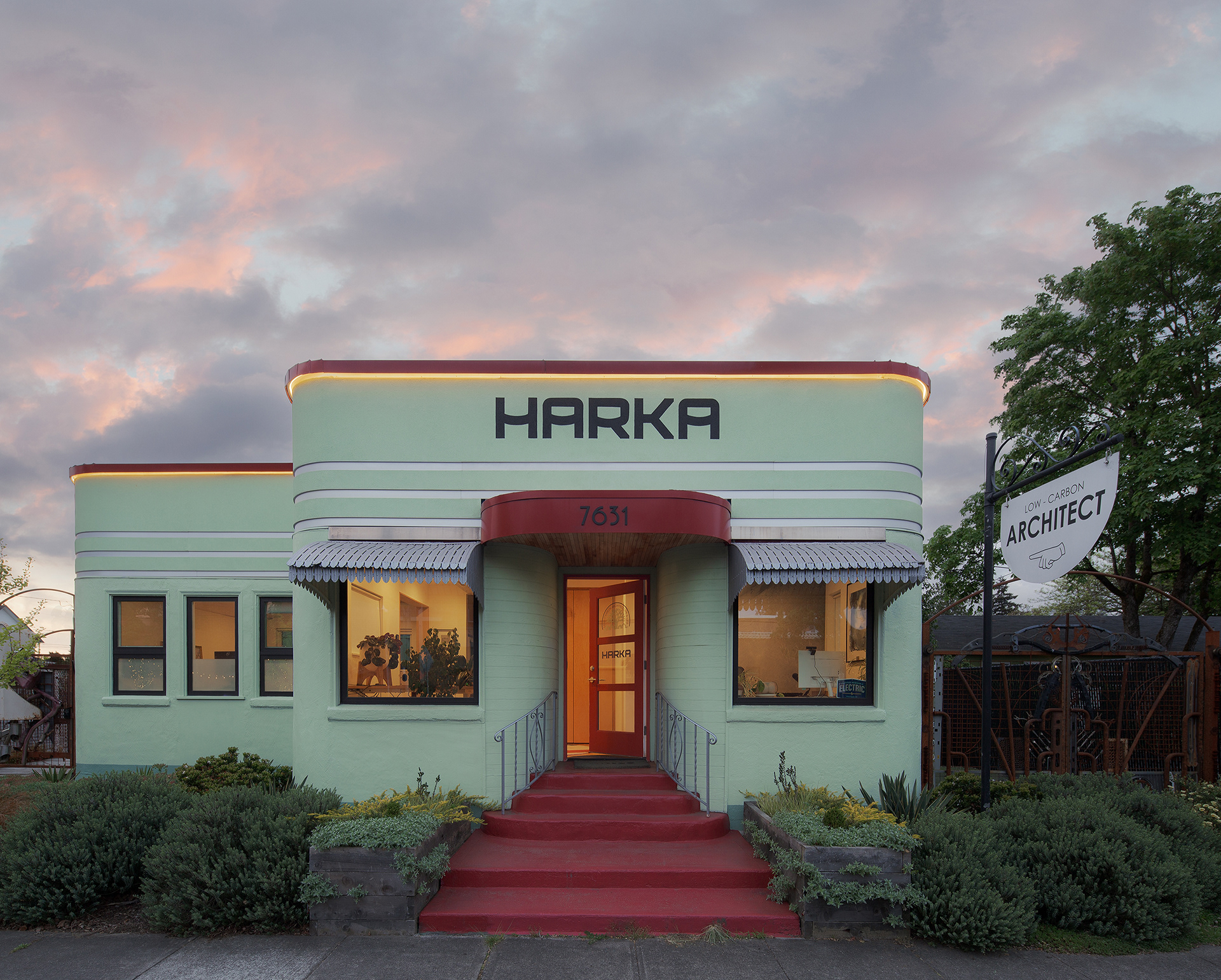
The paint is Supreme Green. The darker shade at the base is the same color, just deeper — a painter's trick to ground the building visually, to give it roots without introducing a new material or a hard seam. The red trim was always there. The "Low Carbon Architect" sign on the iron post out front was designed to look like it had always been there too.
The result is one of only two buildings in Portland officially certified as net-zero. In 577 square feet.
Donaldson describes the finished headquarters as a showroom and a teaching tool. It's a place where clients and contractors can walk through and see the innovations not as renderings or specifications but as a lived, working environment. Hemp wool insulation is visible through a window in the ceiling. GUTEX fiberboard is on display behind glass in the conference room, which doubles as a whiteboard. The solar panels are on the roof. The gates flanking the entrance are fabricated from mufflers and salvaged car parts — functional, eccentric, and entirely consistent with the philosophy of the building they guard.
In the 8-person office space, there is an island with a drawer that slides all the way through. Push it one direction and the storage opens on one side. Push it back through and it opens on the other. No wheels. No hardware. Just two materials moving against each other with enough precision that it works, and keeps working. It is a small thing in a building full of significant things, but it is the kind of detail that reveals how a person thinks.
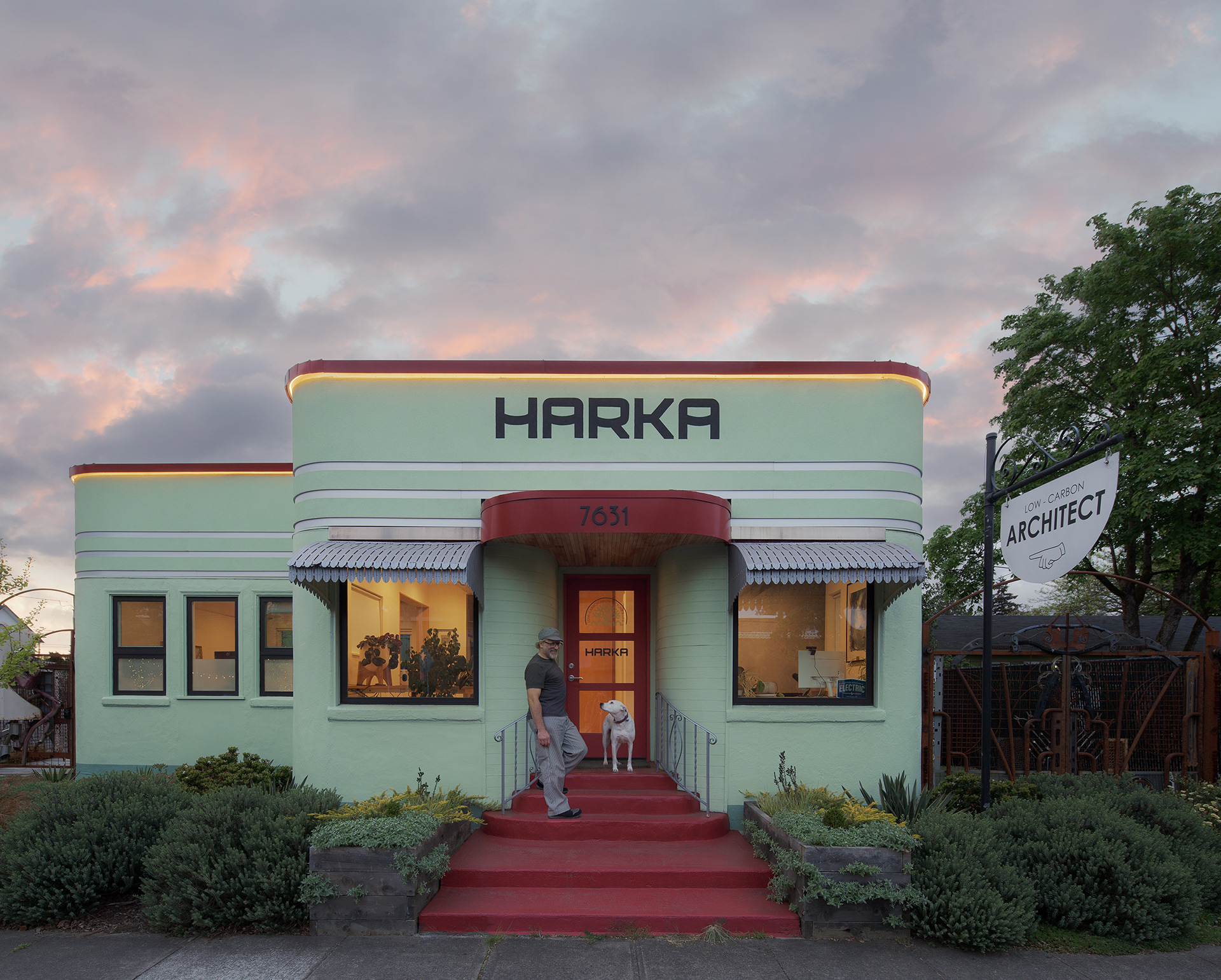
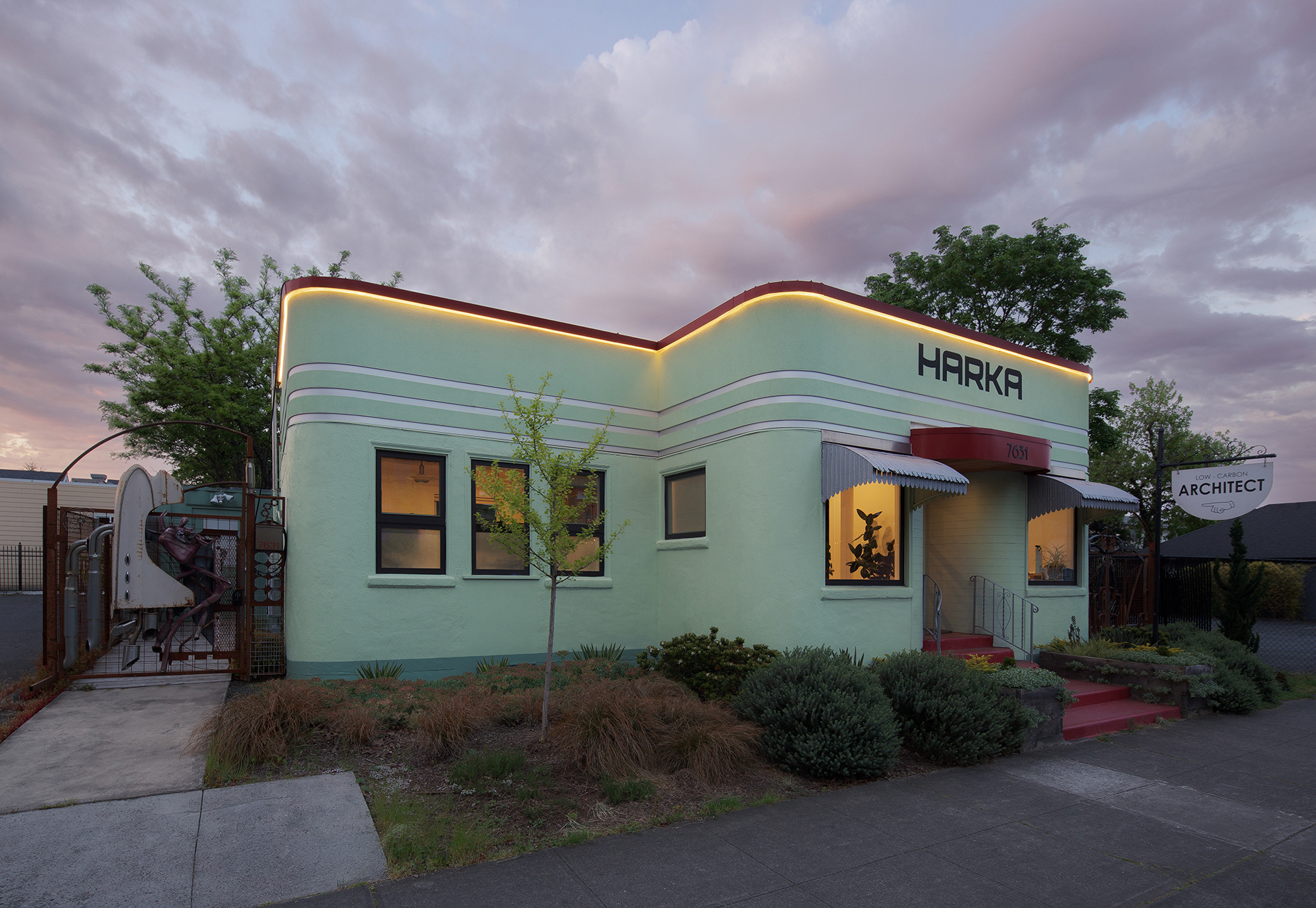
The shoot happened on a Friday evening in early May, the sky doing something pink and purple and dramatic over Montavilla. Patrick mentioned that "we get good skies here". He pointed out the building's added height, how the raised profile changed its presence on the street. He talked about heat exchange, about what it actually means for a building this small to condition itself without waste. Marv, a dog who needed no leash to stay close, was asked to sit on the steps for a frame. He obliged without a fuss.
Patrick shared the building's story as the light faded. Not as a tour, not as a pitch. Just as someone who has thought about this building for years and finds it genuinely worth talking about.
It was hard to stay focused on the camera, and that's not a complaint.